ServicesWater Testing
Water Testing in Scottsdale, Read Out at Your Tap
We come to your home, draw samples from the kitchen faucet and the main line, and run each test in front of you. You see the hardness, dissolved solids, chlorine and pH numbers yourself, and we explain which ones matter for your pipes, water heater and drinking water.
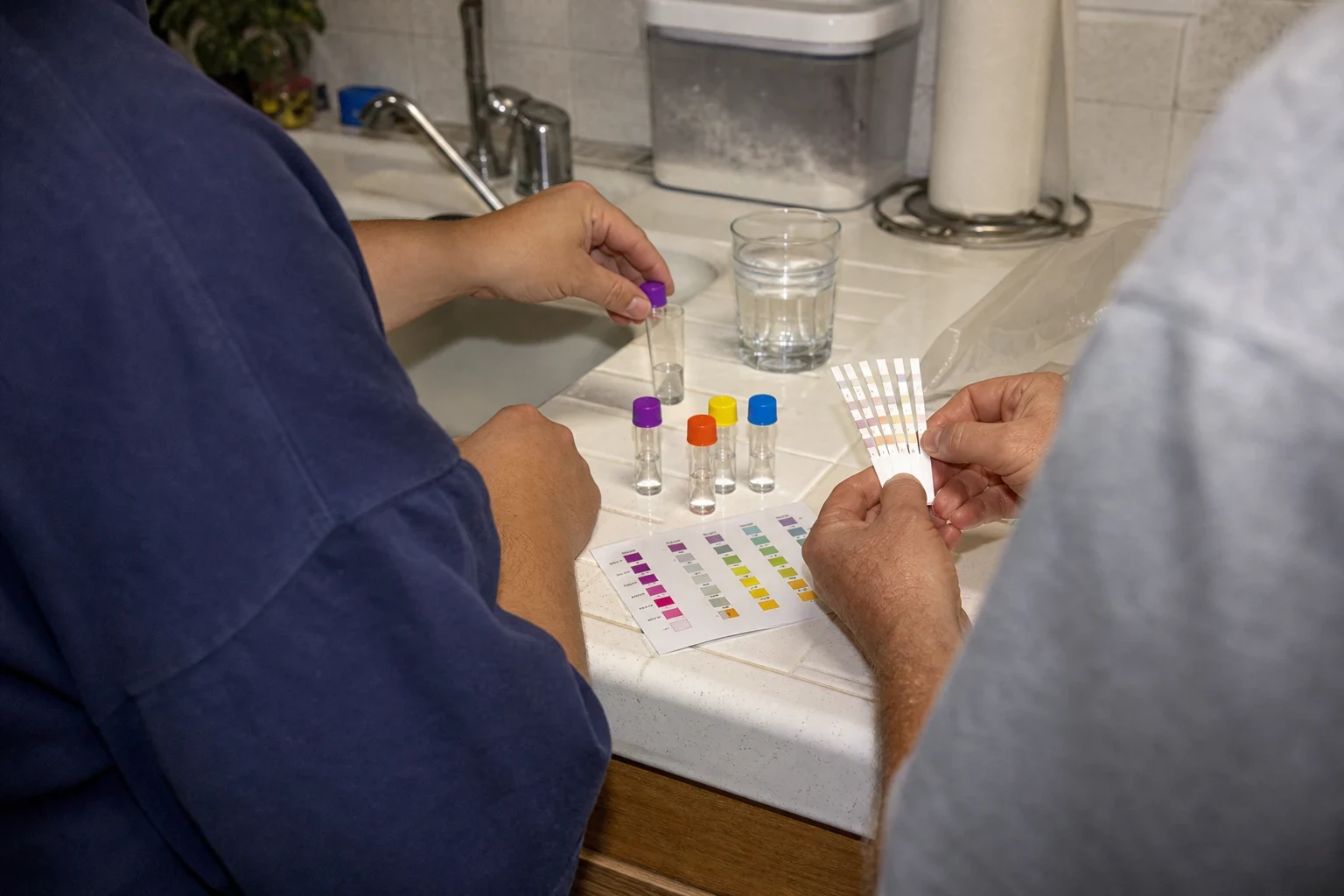
What a Water Test Tells You, and Why We Start Here
Most water treatment mistakes come from guessing. A softener sized for the wrong grain count regenerates too often and wastes salt. A carbon filter chosen for taste does nothing about scale. A test gives us measured numbers to size equipment against, so any recommendation has a reason behind it.
Mineral content can shift with the water source and the season, so we read your water rather than quoting an average for the Scottsdale area. The test is free, it carries zero obligation, and many homeowners use the results simply to understand the white crust on their shower glass.
What We Check During the Visit
Hardness in grains per gallon
We titrate a sample to measure calcium and magnesium. This number drives resin bed size if a softener makes sense, and it explains scale on faucet aerators and inside your water heater.
Total dissolved solids
A TDS meter reads everything dissolved in the water, in parts per million. High TDS often shows up as flat-tasting water and spotting on dishes, and it tells us whether reverse osmosis would make a real difference at the kitchen sink.
Chlorine and pH
We measure the disinfectant level the utility adds, which is what you smell in the shower, and the pH, which affects how water acts on copper lines. Both readings point to whether whole-home filtration with carbon media is worth considering.
Iron and existing equipment
We check for iron, which leaves orange staining. If you already have a softener or filter, we sample before and after it to see whether it is still doing its job or just using salt and power.
Written results you keep
Every reading goes on a results sheet with what each number means. We also photograph scale on fixtures or the water heater drain valve if you ask, so you have a dated record.
Signs It Is Time to Test Your Water
- White crust on glass and fixtures
- Calcium carbonate left behind as water evaporates. It builds fastest on shower doors, faucet bases and showerheads.
- Crackling from the water heater
- Heat pulls minerals out of solution, and they settle as a gritty bed at the bottom of the tank. When the burner lights, small pockets of water trapped under that bed boil and pop. That is the sound you hear, and it also means the heater takes longer to bring a full tank back up to temperature.
- Spotty dishes and stiff laundry
- Hard minerals react with detergent instead of letting it clean, so you use more soap and still see film.
- A strong pool smell from the tap
- That is usually disinfectant, which is safe at utility levels but bothers many people in drinking water and the shower.
- An old softener you are unsure about
- A unit that stopped using salt, or uses far too much, may have a failed control valve or exhausted resin. A before-and-after test answers it in minutes.
- You just bought the home
- You inherit whatever equipment the last owner left. Testing tells you whether it works and whether you need it at all.
How the Test Visit Runs
- 1
A short call to schedule
You tell us what you are noticing and whether you have existing equipment. We set a time that works for you.
- 2
Samples from the right spots
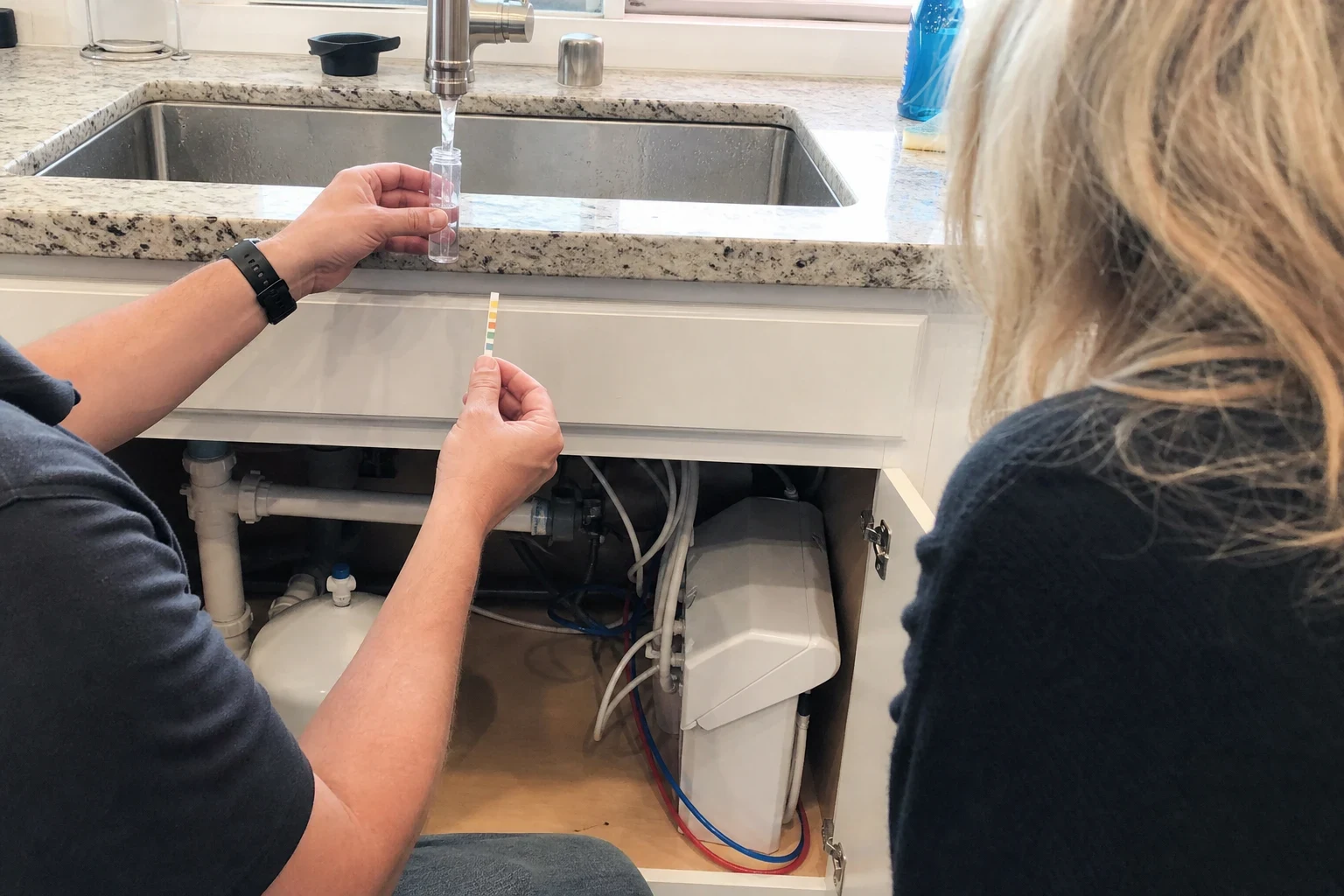
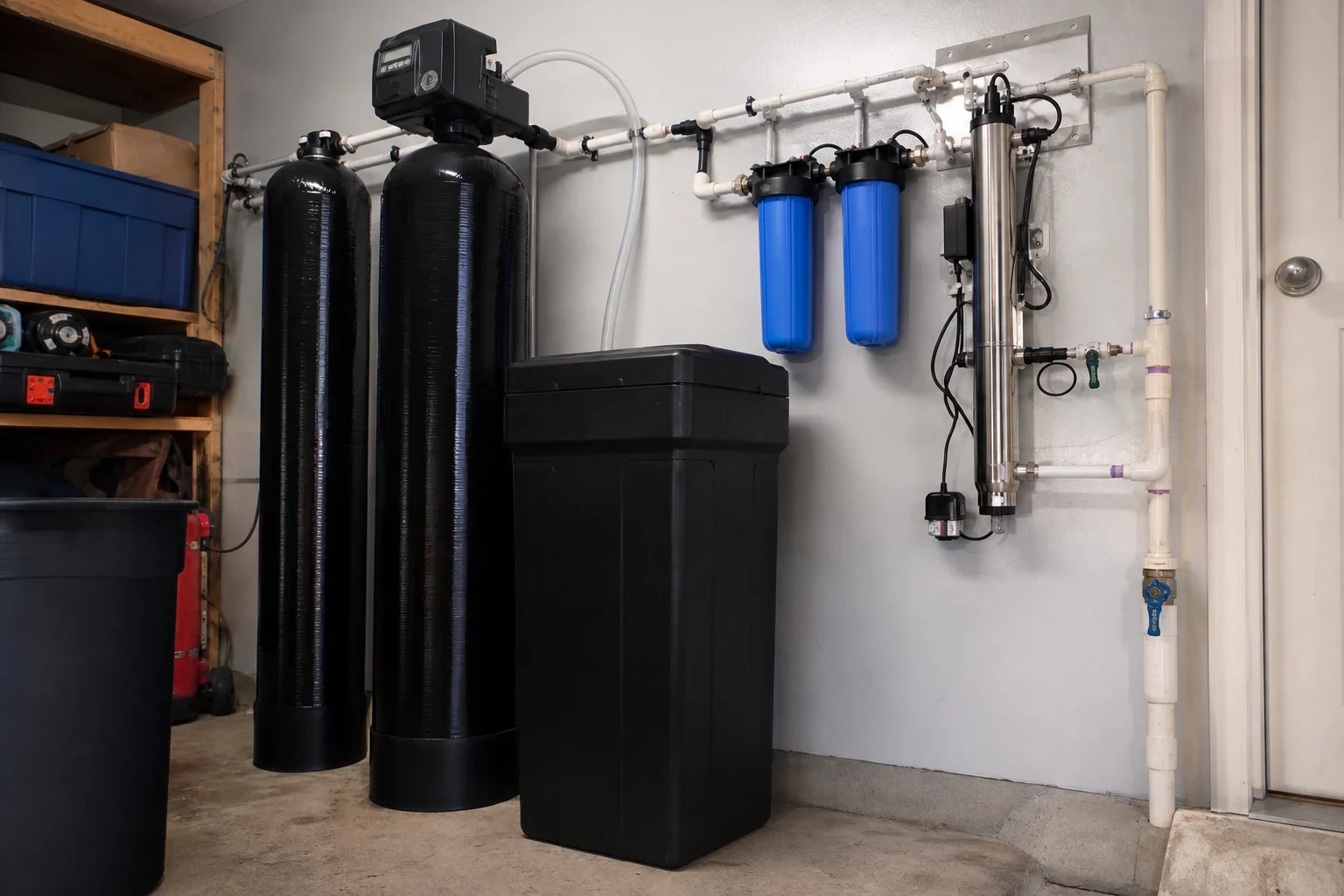
We draw from the kitchen tap and from a point near where the main line enters your home, usually a hose bib or the softener loop in the garage. If equipment is installed, we sample both sides of it.
- 3
Tests run in front of you
Hardness, TDS, chlorine, pH and iron are measured on the spot. You watch the color changes and meter readings rather than waiting for a number we report later.
- 4
Results explained, options laid out
We go through each reading and tell you plainly if nothing needs treating. If something does, we describe which system addresses it and why, then leave the written results with you.
The Test Is Free, and Here Is What Shapes a System Price Later
You pay nothing for the water test and owe nothing after it. Should you choose equipment, installation comes with every water treatment system, and we quote the installed price by phone or during the visit. The items below are what raise or lower it.
- What your hardness and TDS come out to
- Harder water calls for a bigger resin bed, and a high TDS number can make reverse osmosis worth a look. Because the test produces these figures, pricing waits until it is done.
- Household size and fixture count
- Five people and three bathrooms use much more water in a day than two people in a small house. That daily use decides how often a softener has to regenerate, which steers the tank size and control valve we would pick.
- Reaching the main line
- Plenty of local garages already have a softener loop plumbed in. Where there isn't one, we have to run fresh lines to the main, which means more fittings and more hours.
- Taking out an old unit
- Some jobs include unhooking and hauling off a dead softener or filter housing; many don't.
Water Testing Questions
- Do you charge anything for the test?
- No. There is no fee for the visit and nothing you have to buy afterward. When your readings come back fine, we say so plainly and hand you the results sheet anyway.
- How long does the visit take?
- Plan on roughly half an hour to an hour. Sampling and testing are quick; most of the time goes to walking through the readings and answering your questions.
- Is Scottsdale water hard enough to need a softener?
- Many homeowners in the area see scale, but how hard your water is depends on the source and the season. We measure your actual grains per gallon before suggesting a water softener, so the answer is based on your water rather than an average.
- Can the results help with a home warranty or insurance claim for a failed water heater?
- They can give you a documented record: dated readings and photos of scale or sediment we found. We explain what those findings mean, but we are not the adjuster and cannot tell you what a policy covers. Your insurer or warranty company makes that call.
- If I buy a system, what warranty comes with it?
- Equipment valves carry a 5-year warranty, and installation and labor carry a separate 5-year warranty. We go over which parts each one covers before any work starts.
Find Out What Is Actually in Your Water
One visit gives you measured numbers and a plain explanation, with no pressure to buy. So far, homeowners have given us 3 five-star Google reviews.