ServicesReverse Osmosis
Reverse Osmosis in Scottsdale, Fitted Under Your Sink
Our under-sink reverse osmosis systems send cold water through sediment, carbon and a semipermeable membrane stage, then to a faucet of its own. The result is drinking and cooking water with far fewer dissolved solids, and installation is included with the system.
How Reverse Osmosis Works and Where It Belongs
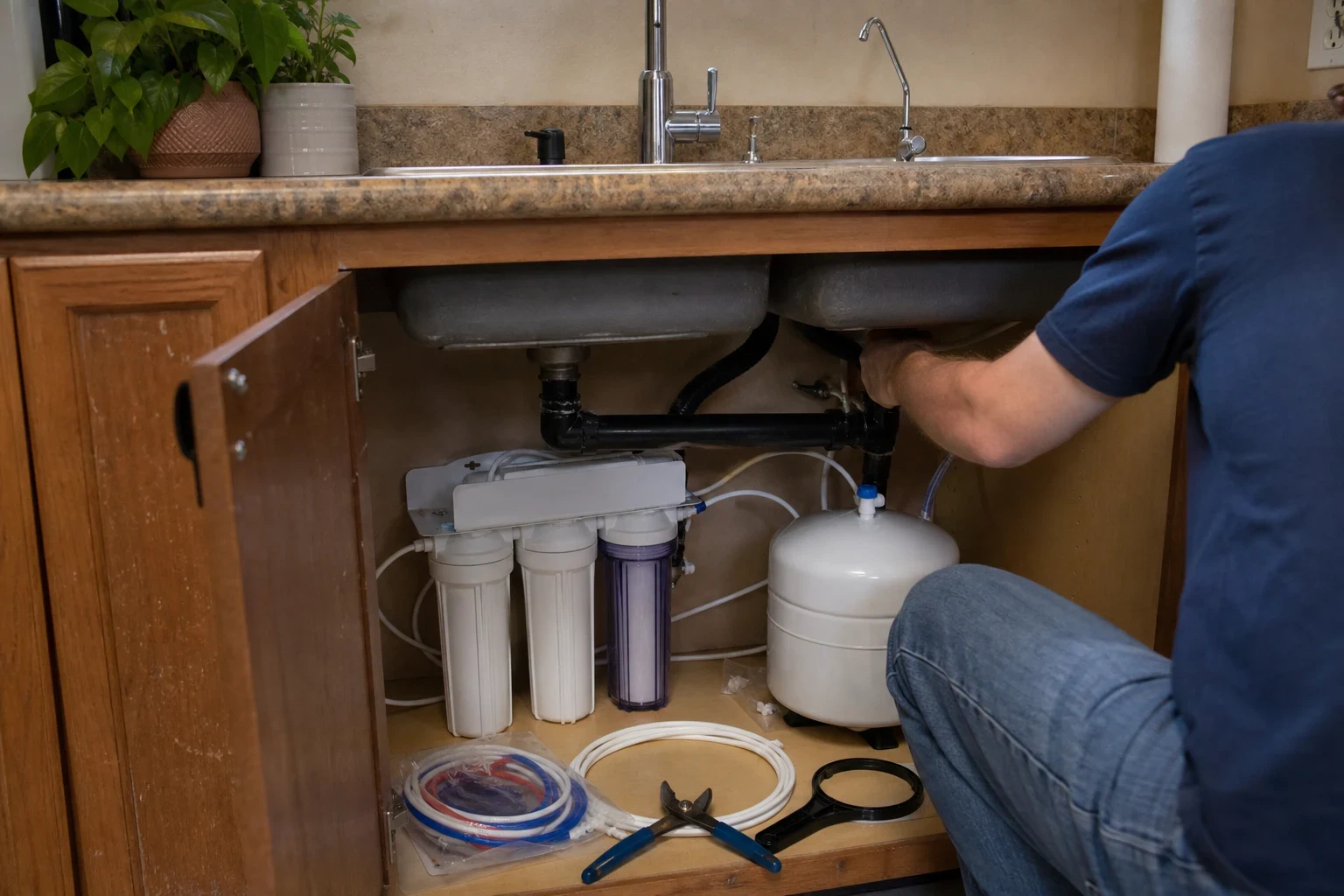
The whole process runs on your home's water pressure. That pressure forces water against a membrane so fine that dissolved ions such as calcium, sodium and nitrate are held back while water molecules pass. The treated water, known as permeate, fills a small storage tank that supplies its own faucet, and the rejected minerals are rinsed away down the drain line.
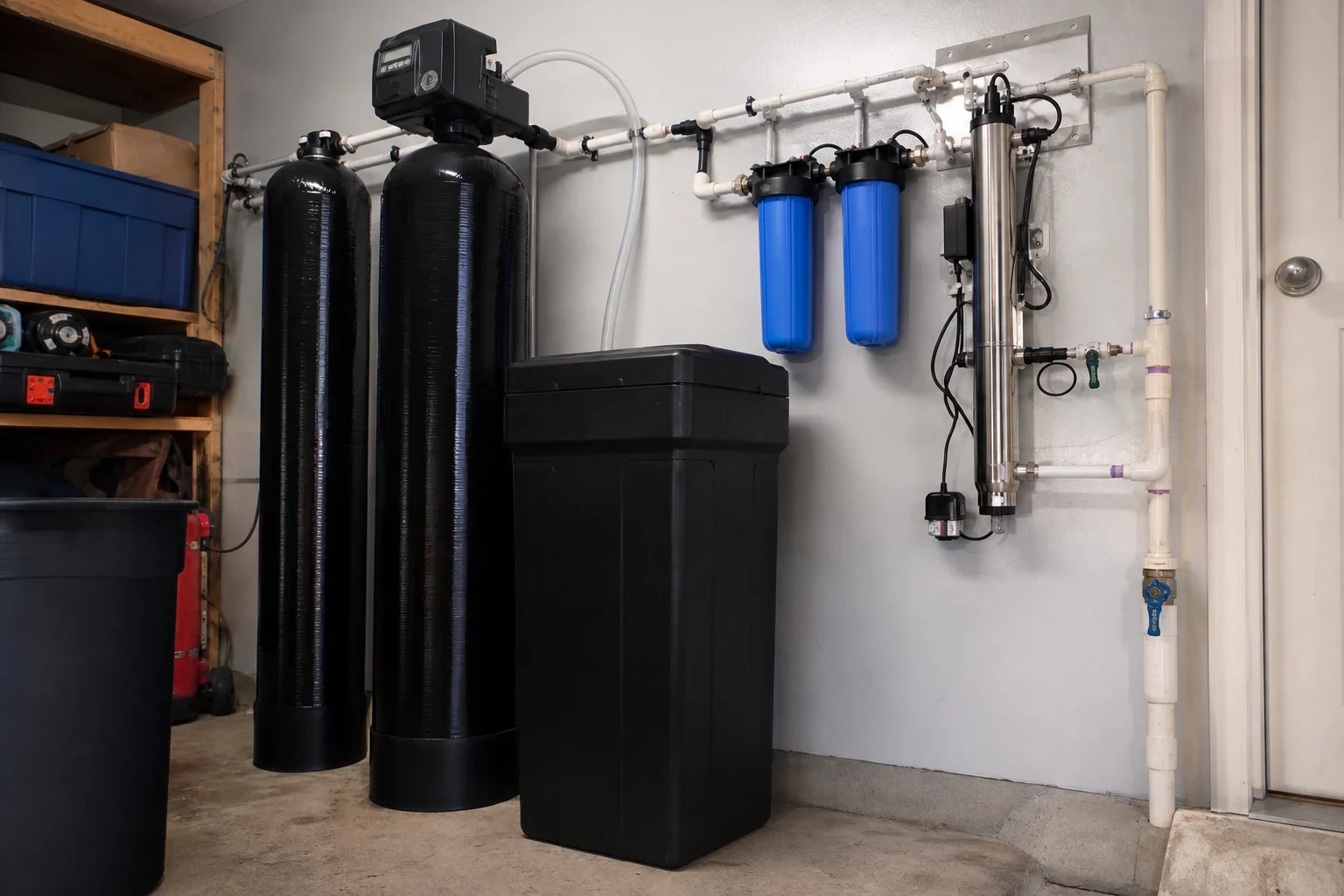
Choose it when the water you drink is the concern: a mineral taste, cloudy ice cubes, white residue in the coffee maker, or a high total dissolved solids reading. It does not treat the whole house. Spots on shower glass and a chlorine smell in the bathroom come from water that never passes through an under-sink unit. A water softener or whole-home filtration handles those, and we will suggest that instead if your test calls for it.
Water in the Valley is loaded with minerals, and those minerals are what shorten a membrane's life. That is why we test before anything else and size the prefilters to your actual readings.
What Your RO Installation Includes
Sediment prefilter
A 5-micron cartridge catches sand, rust flakes and pipe debris before they can clog the carbon stage. It is the cheapest part to replace and protects everything downstream.
Carbon block stage
Thin-film membranes are damaged by chlorine and chloramine. The carbon block removes them first, which also takes out most of the taste and odor complaints people notice.
Membrane, tank and dedicated faucet
We mount the membrane housing, a pressurized storage tank with an internal bladder, and a faucet set through the sink deck or countertop. A carbon polishing filter after the tank takes out any flat taste from storage.
Drain saddle and shut-off parts
The reject line connects to your sink drain through a saddle clamp above the trap, with an air gap where code or the faucet design calls for it. An automatic shut-off valve and check valve stop the system from running water to the drain once the tank is full.
Leak check and walkthrough
We pressure the system, check every push-fit connection with dry paper towel, and show you how the cartridges come out. Install is included with the system, and the equipment valves along with the installation and labor each carry a 5-year warranty.
Signs an RO System Is Worth a Look
- White crust in the kettle
- Scale in a kettle or coffee maker is calcium and magnesium dropping out when water heats. If you are drinking that water, a membrane will remove most of it.
- Cloudy ice and spotted glasses
- Dissolved solids show up as haze in ice cubes and dried rings on glassware. A TDS meter reading during your water test tells us how much is there.
- Buying cases of bottled water
- If your family has stopped drinking from the tap because of taste, a system at the sink replaces the trips to the store and the plastic.
- An old unit that drips or runs nonstop
- A tank that never fills, a faucet that trickles, or water constantly running to the drain usually points to a failed membrane, a worn shut-off valve or a waterlogged tank bladder. We check whether it can be repaired before quoting a new one.
How the Job Runs
- 1
Free water test
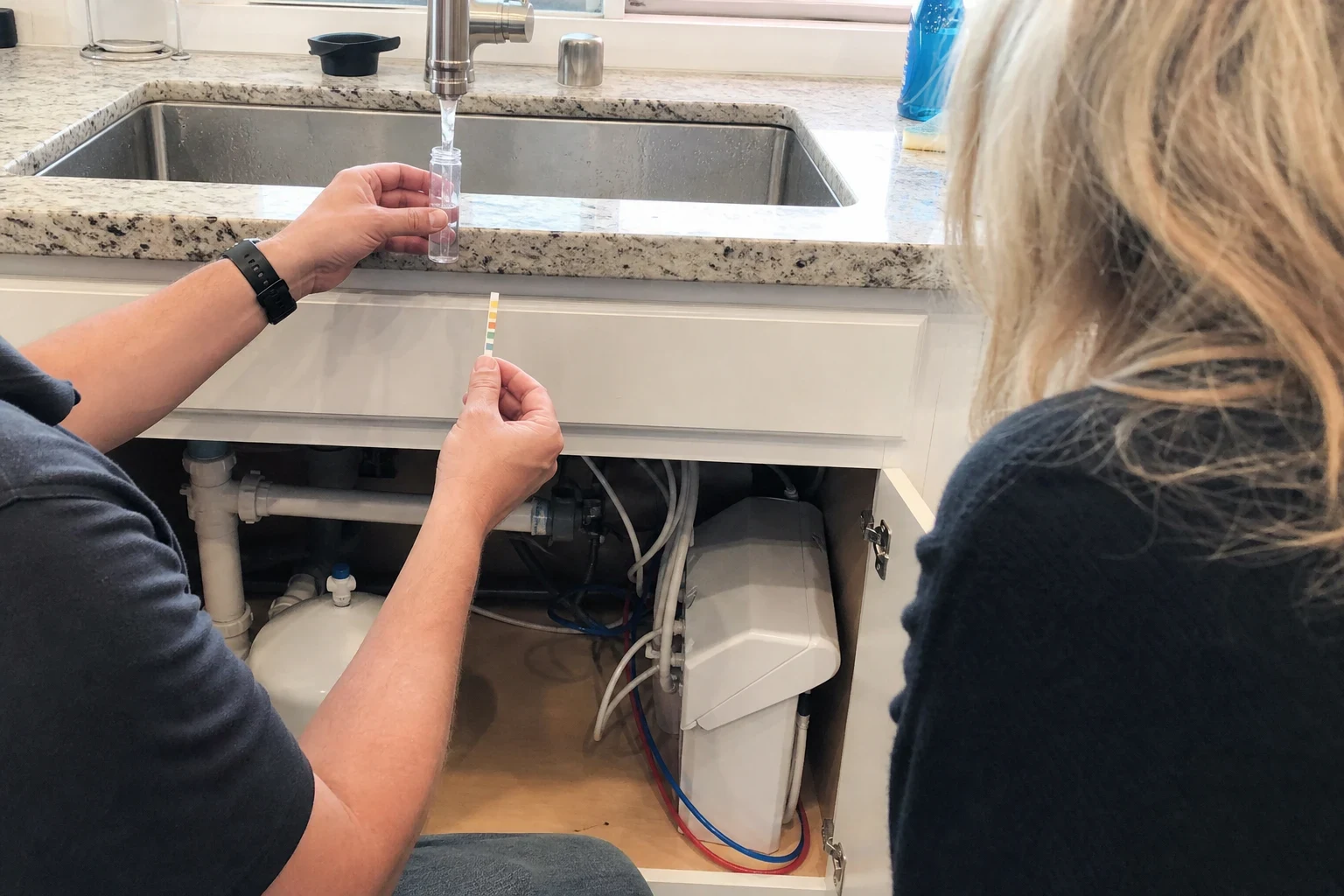
At your kitchen tap we check dissolved solids, hardness and chlorine levels, with zero obligation. Those readings tell us whether RO makes sense for your home and how much prefiltration your water needs.
- 2
Installed pricing by phone
You get the system, filter costs and install explained part by part, so you know what the yearly cartridge changes will run before you commit.
- 3
Install under the sink
We shut off the cold supply, add a feed valve, mount the housings and tank, set the faucet and tie in the drain line. Most of the work happens inside the cabinet, and we put down towels before anything is opened.
- 4
Flush and check
New carbon and membranes need their first tanks flushed to drain. We run that, recheck TDS at the new faucet so you see the drop, and clean up before we leave.
What Moves the Price of an RO System
Your quote depends on the water going in and the sink it goes under. We give you installed pricing by phone after the free test, and installation is included with the system. Ongoing filter and membrane costs are part of the conversation too.
- Your water chemistry
- High hardness or TDS scales a membrane faster. Some homes need an extra prefilter or benefit from a softener upstream to keep the membrane working longer.
- Faucet placement
- An unused sprayer or soap-dispenser hole can often take the new faucet as is. Granite and quartz tops need a slow, water-cooled cut with a diamond core bit, which adds labor.
- Fridge and ice maker hookups
- Sending filtered water to the refrigerator means a tee off the RO outlet and a longer tubing run, sometimes through base cabinets or under the floor. The farther the fridge sits from the sink, the more time that run takes.
- System design
- Tankless units with a built-in pump, remineralization stages and permeate pumps for low water pressure each change the equipment cost.
Questions About Reverse Osmosis
- How much water goes down the drain with RO?
- All RO units send some water to the drain to flush away the minerals the membrane rejects. How much depends on the membrane, your line pressure and whether there is a permeate pump. We set the shut-off valve so drain flow stops completely once the tank fills.
- How often are filters replaced?
- Expect to change the sediment and carbon prefilters about once a year. New prefilters keep grit and chlorine away from the membrane, which lets it last through several rounds of cartridges. Harder water shortens the interval, so we base your schedule on your own test results.
- Will RO take out the good minerals?
- It does remove most dissolved minerals, along with the rest. Food, not water, supplies most of the minerals people take in. If you like the taste of mineralized water better, we can fit a remineralization cartridge after the membrane.
- My old RO system leaked under the sink. Can you help with my insurance claim?
- We can take photos of the damaged cabinet base and the part that failed, like a cracked housing or a loose push-fit line, and write up what we saw. Adjusters usually want exactly that kind of record. Coverage is the insurer's decision, not ours, and we won't suggest otherwise.
- What are customers saying?
- We have 3 five-star Google reviews on our profile. It is a small number, and we want it to grow from systems that keep running, not from bold claims.
See What Your Tap Water Holds First
A free water test shows your dissolved solids and hardness before you spend anything. From there we can price an installed RO system for your sink.