ServicesWater Softeners
Water Softener Installation in Scottsdale
Hard water leaves white crust on faucets, spots on glass and scale inside your water heater. We measure your hardness first, size the resin tank and control valve to your home's actual use, and install the softener so it regenerates only when it needs to.
What a Softener Does and When It Is the Right Call
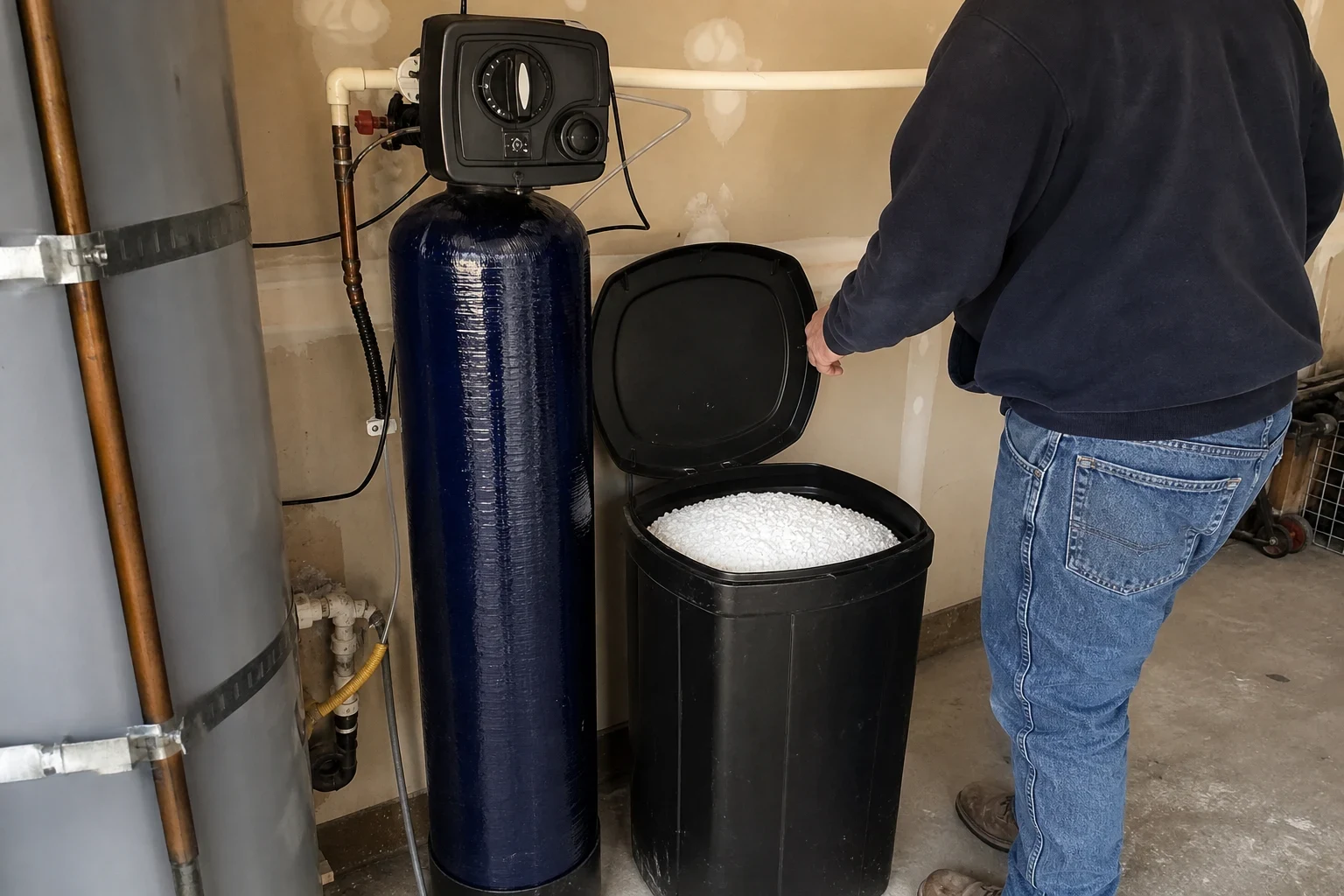
Scale comes from two dissolved minerals, calcium and magnesium. Inside a softener, your water flows through a bed of resin beads charged with sodium or potassium ions. As the water moves past, the beads grab the hardness minerals and release their own ions in exchange, so what comes out the other side stops leaving deposits on pipes, heating elements and fixtures. Once the beads are loaded, the control valve starts a regeneration cycle, pulling brine from the salt tank through the resin and sending the captured minerals to the drain.
Hard water is common across the Valley, but a softener only makes sense when a test shows the hardness level in your home. That number sets the resin capacity and the regeneration schedule. If your main complaint is taste or odor rather than scale, whole-home filtration or reverse osmosis may be the better fit, and we will tell you so.
What Your Softener Installation Includes
- Hardness and iron measurement
- We test hardness in grains per gallon and check for iron, which fouls resin over time. Those readings decide the system size.
- Sized resin tank and metered valve
- We match resin capacity to your hardness and household size. A metered control valve tracks actual gallons used, so it regenerates on demand instead of on a fixed timer that wastes salt and water.
- Connection to your loop with a bypass
- Many homes in the area already have a plumbed softener loop. We tie in there and include a bypass valve so you can shut the softener out of service without cutting off water to the house.
- Air-gapped drain line
- Rinse water from each regeneration cycle goes to a drain through an open air gap. That physical break means dirty water can never be pulled back up into the softener or your supply.
- Startup, settings and cleanup
- We load salt, program hardness and regeneration time, run a test cycle and check every fitting for drips. Install is included with the system, and we leave the work area clean.
Signs Your Home Needs a Softener
White crust on fixtures
When hard water dries on a faucet or showerhead, the calcium carbonate stays behind and builds into a chalky ring that scrubbing only removes for a while.
Spotted glasses and shower doors
Mineral spots that return right after cleaning point to hard water, not your detergent.
Water heater noise
Popping or rumbling from the tank usually means scale has settled on the bottom, which insulates the burner or element and lowers efficiency.
An old softener that has quit
A brine tank that stays full for months, or scale spots creeping back onto the shower glass, usually traces to a stuck control valve, exhausted resin or a clogged injector. We find out whether repairing the old unit is worth the money before we talk about a new one.
Leaks from an aging unit
A cracked tank or failed valve can wet cabinets and flooring. We photograph the damage and the failed part so you have a clear record if you choose to talk to your insurer.
How Your Install Day Runs
- 1
Free water test
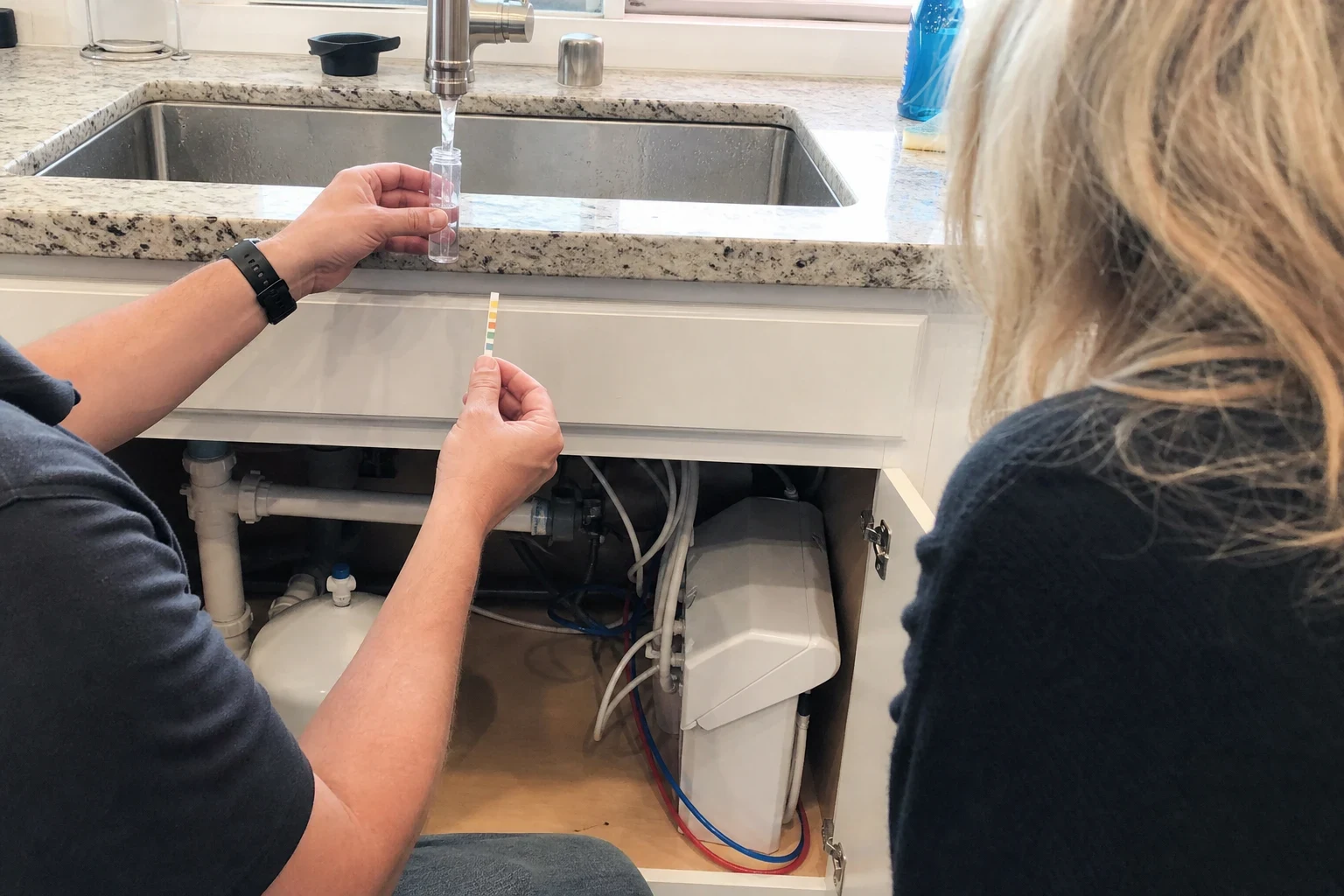
First we check your water, free and with zero obligation to buy anything. We walk you through the hardness and iron numbers and the system size they point to.
- 2
Written system pricing
You get installed system pricing that names the tank, valve and any added parts before anything is scheduled.
- 3
Removal and tie-in
We shut off the water, drain the lines, remove any old unit and connect the new softener, bypass and drain. Most installs take part of a day.
- 4
Programming and walkthrough
Once the control valve is programmed for your hardness, we trigger a full test regeneration. Then we show you where the salt goes, how the bypass handle works and what a salt bridge looks like inside the brine tank so you can break it up early.
What Moves the Price of a Softener
No two homes need exactly the same system, so we price after the test. The cost comes down to the equipment your water calls for and the plumbing work needed to fit it. Your pricing lists each part so you can see where the money goes.
- Hardness and number of people
- Each extra person adds daily gallons, and each extra grain of hardness adds minerals per gallon. Together they set how much resin the tank must hold between regenerations.
- Existing loop or new plumbing
- A ready loop keeps labor simple. Running a new loop, drain or electrical outlet adds time and material.
- Valve type
- Metered valves cost more up front than timer models but use less salt and water over the life of the system.
- Old equipment removal
- Hauling away an old softener or replacing corroded fittings at the loop adds a modest amount of work.
Common Questions About Softeners
Something not covered here? (480) 256-8478
Does softened water have a salty taste?
For most homes, no. Ion exchange swaps in only a small amount of sodium, far less than most people can pick up on their tongue. If you would rather keep that sodium out of what you drink and cook with, a reverse osmosis faucet at the kitchen sink removes most of it.
What warranty comes with the install?
The equipment valves carry a 5-year warranty, and our installation and labor carry a separate 5-year warranty. If a fitting we made starts to drip, that labor is covered.
How much upkeep does a softener need?
Mainly adding salt every few weeks and breaking up any hard crust that forms in the brine tank. Iron in the water can foul the resin, so we note whether a resin cleaner makes sense for your readings.
Does a softener also filter my water?
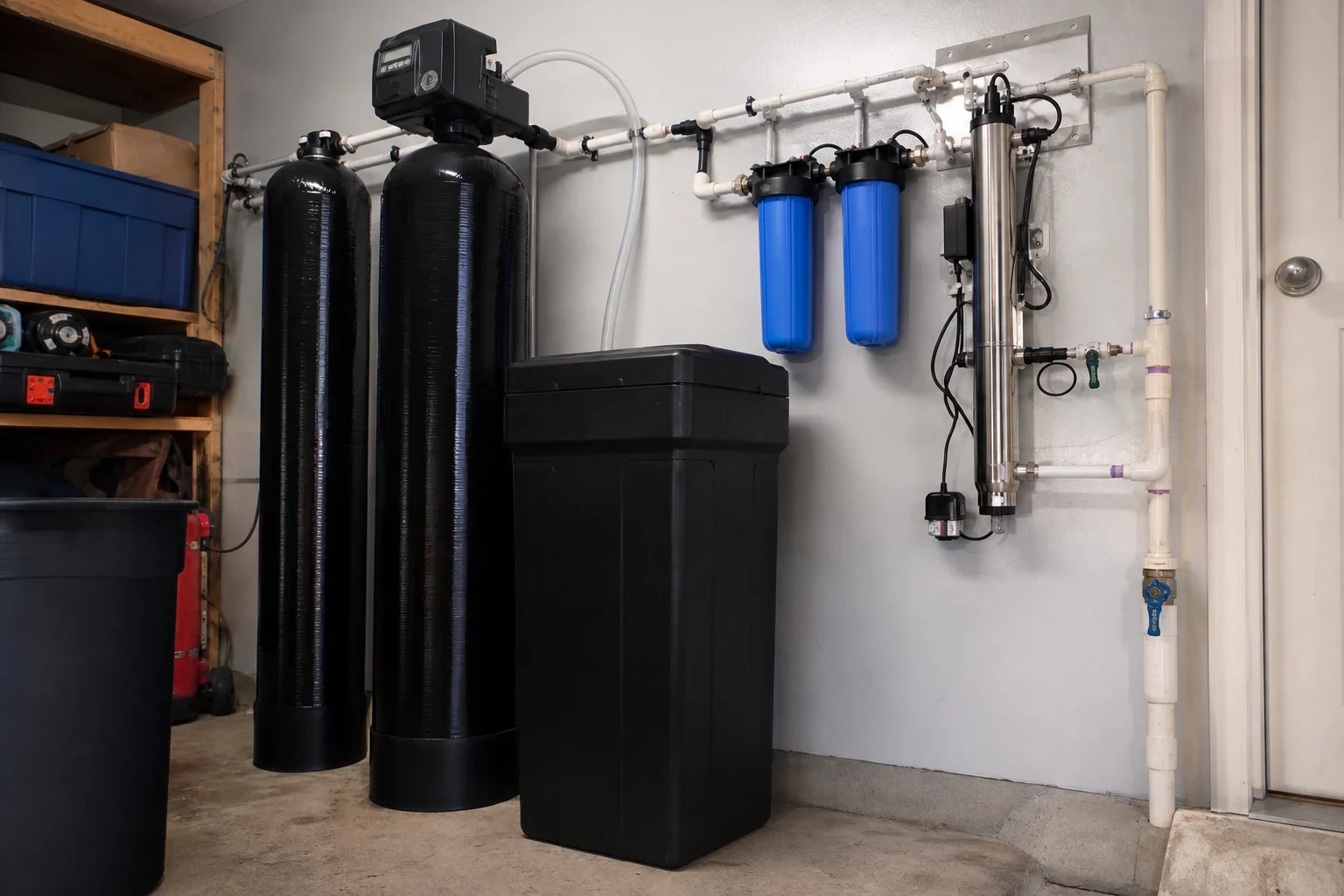
No. It removes hardness minerals, not chlorine taste or odor. Many homes pair a softener with whole-home filtration, and the water test shows whether you need one, the other or both.
Will insurance cover damage from scale or a leaking softener?
That depends on your policy, and the insurer makes the call. Gradual scale buildup is often treated differently from a sudden leak. We document what we find with photos and a written description of the failed part, but we do not act as your adjuster.
How do I know your work is any good?
We have 3 five-star Google reviews from customers, and you are welcome to read them before you call. You can also ask us anything about the equipment during your free test.
Find Out How Hard Your Water Really Is
We will test your water for free, explain the hardness reading and give you installed system pricing with every part named. We work in Scottsdale and nearby towns including Fountain Hills and Paradise Valley.