What Does a Water Softener Actually Do to the Water in Scottsdale?
A softener changes one specific thing about your water, and knowing exactly what that is helps you decide whether your home needs one.
What does a water softener actually do to the water?
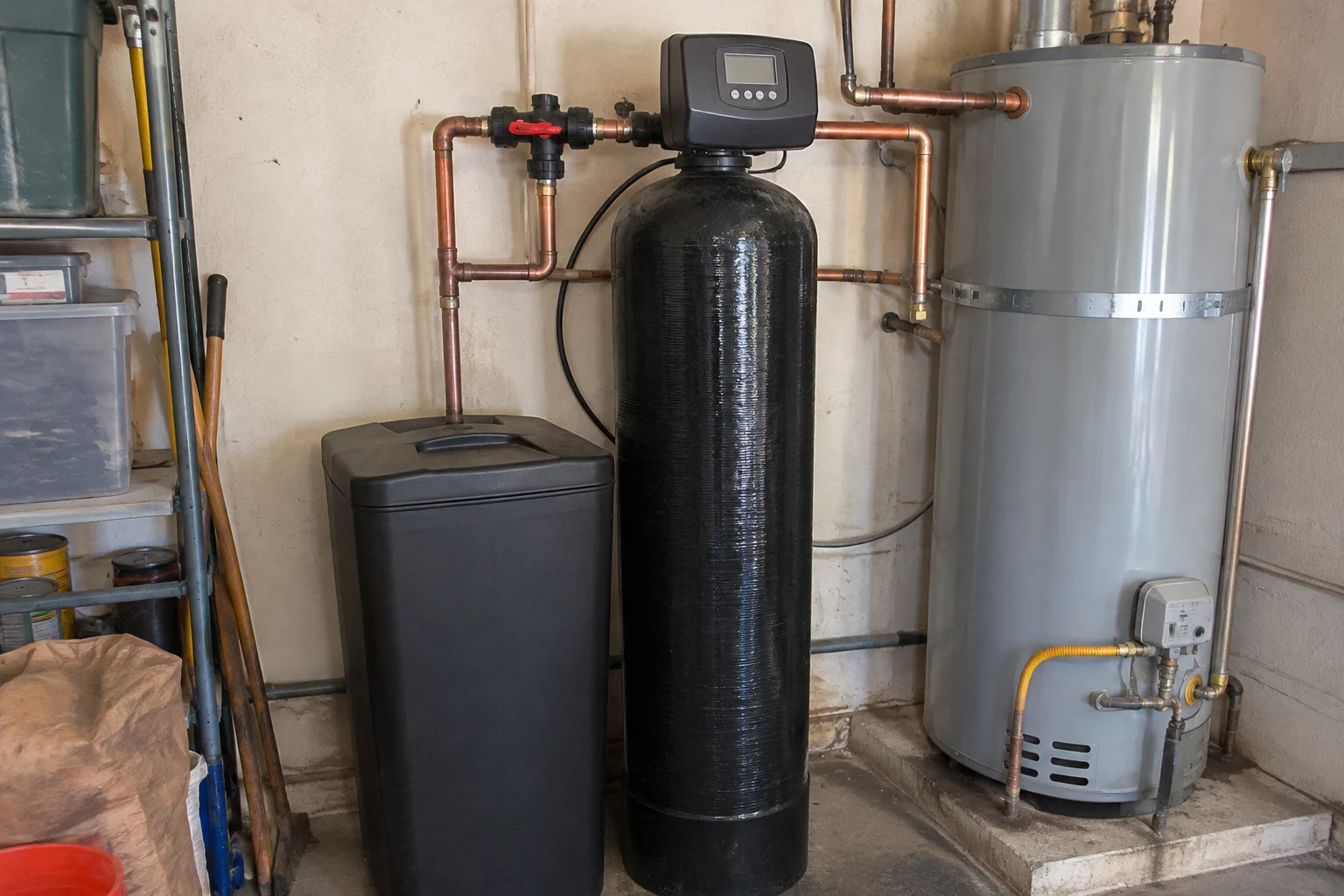
A water softener removes calcium and magnesium, the minerals that make water hard, by trading them for sodium or potassium ions on a bed of resin beads. That keeps scale from forming in pipes, fixtures and your water heater. It does not filter out chlorine, lead or most other contaminants.
What happens inside the resin tank
The tall tank on a softener is filled with small plastic resin beads, usually a polystyrene material cross-linked to hold its shape. Each bead carries a negative charge, and when the system is fresh, those charged sites hold loosely attached sodium ions (or potassium ions, if you use potassium chloride).
As hard water flows down through the resin, calcium and magnesium ions are attracted to the beads more strongly than sodium is. The beads grab the hardness minerals and release sodium in exchange. This is called ion exchange, and it is the whole job of a standard salt-based softener.
The water leaving the tank carries roughly the same total amount of dissolved minerals. The difference is which minerals they are. Calcium and magnesium form scale when heated or left to dry. Sodium stays dissolved, so it does not leave crust behind.
How regeneration resets the resin
Resin beads fill up. Once most of their sites hold calcium and magnesium, hard water starts slipping through. The control valve on top of the tank tracks gallons used or elapsed days and then runs a regeneration cycle, usually at night when no one is drawing water.
During regeneration, concentrated salt brine from the shorter brine tank floods the resin. The sheer amount of sodium pushes the hardness minerals off the beads, and that mineral-heavy rinse water goes to the drain. A typical cycle runs in this order:
- Backwash: water flows upward to loosen the resin bed and flush out sediment.
- Brine draw: the valve pulls brine from the salt tank through the resin.
- Slow rinse: fresh water pushes the brine through slowly so exchange can finish.
- Fast rinse: a quick flush packs the bed and clears leftover salt.
- Brine refill: the valve sends water back to the salt tank to dissolve salt for the next cycle.
What you notice at the tap and around your home
Most homeowners notice the bathroom first. Soap and shampoo lather more easily because calcium is no longer binding with soap to form curd, and that gray film on tile and glass shower doors builds up much more slowly. In Scottsdale's dry air, water evaporates fast on fixtures, which is why hard-water spots show up so quickly; softened water leaves far less behind.
The bigger benefit is out of sight. When water is heated, dissolved calcium drops out as calcium carbonate. In a tank water heater it settles as a crusty layer on the bottom, insulating the water from the burner or elements so the unit works harder. In a tankless heater it coats the narrow passages of the heat exchanger. Softened water slows that buildup in heaters, dishwashers, faucet cartridges and showerheads.
Some people describe softened water as feeling slick. That is soap rinsing off skin without calcium residue holding onto it, not leftover soap.
What a softener does not remove
A softener is not a filter. Ion exchange resin targets positively charged hardness minerals, so it leaves most other things in your water untouched. If taste, odor or a specific contaminant is the real concern, a softener alone will not solve it.
Here is what passes straight through a standard softener:
- Chlorine or chloramine used by the city for disinfection, which causes most taste and smell complaints
- Lead picked up from older plumbing or fixtures
- Sediment beyond what a backwash can handle
- Arsenic, nitrates, PFAS and most dissolved compounds other than hardness
Scale damage, water heaters and insurance questions
When a water heater or appliance fails, homeowners often ask whether hard water damage is covered. Many policies treat gradual mineral buildup as wear and maintenance, while a sudden leak may be handled differently. We cannot tell you what your policy covers; your agent or adjuster decides that.
What we can do is give you a documented starting point. Our free water test produces a hardness reading you can share with your insurer, so the conversation starts from a measured number instead of a guess. The failed water heater or appliance itself should be assessed by a plumber, who can tell you what actually caused it to fail, without anyone overstating the case.
More questions about softened water
Something not covered here? (480) 256-8478
Does softened water taste salty?
Usually not. The sodium added is proportional to how hard the water was, and at typical levels most people cannot taste it. Very hard water produces more added sodium, which some people do notice.
Should I drink softened water if I watch my sodium?
Ask your doctor about your own limits. Many homeowners pair a softener with under-sink reverse osmosis, which removes most of the sodium from drinking and cooking water, or use potassium chloride in the brine tank instead of salt.
How do I know my home needs a softener?
Test first. A water test measures hardness in grains per gallon, and that number tells us whether a softener makes sense and how large the resin tank should be. We offer a free water test with zero obligation.
Will a softener fix chlorine taste?
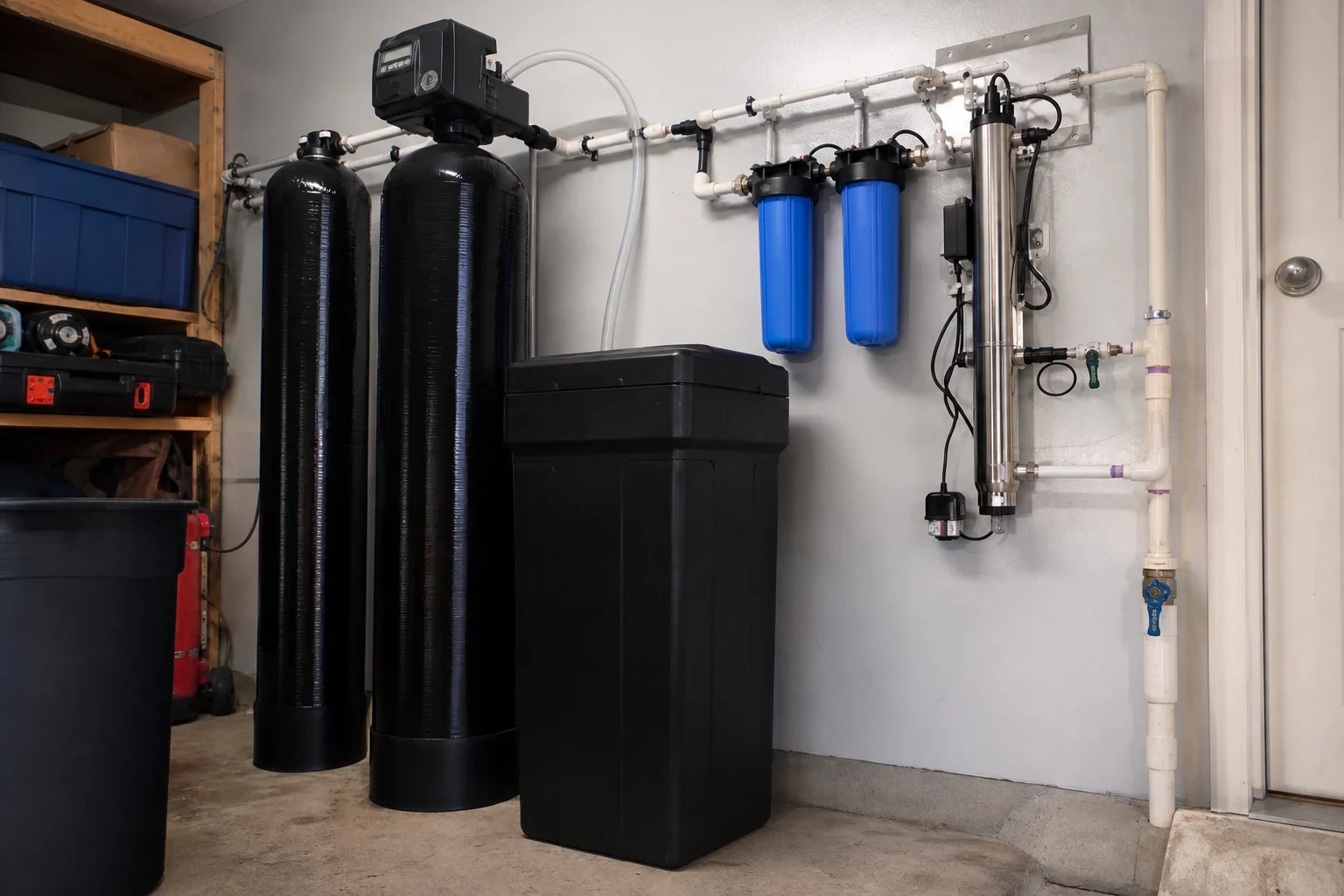
No. Chlorine passes through softener resin. Whole-home filtration with activated carbon is the part that handles chlorine taste and odor, and it can be installed ahead of a softener.
See what is actually in your water
Call and we will set up a free water test with zero obligation, explain the hardness reading and what it means for your water heater and fixtures, and give you installed system pricing if a softener makes sense. Install is included with our water treatment systems.